Programmatic advertising uses technology and real-time auctions to buy and optimize ad placements across websites, apps, and connected devices. It works instantly, allowing on-the-fly adjustments to placements and budgets based on performance data.
To run programmatic ads, marketers work through a Demand-Side Platform (DSP) to buy inventory from a Supply-Side Platform (SSP).
When someone loads a webpage, a real-time bidding auction fires instantly. Advertisers compete for the impression based on the visitor's attributes and the page context. The highest bid wins the placement, and the chosen creative is served to that person. All of this happens in a fraction of a second, delivering an ad matched to the individual's profile and behavior.
How 720 runs a programmatic campaign, step by step
As an AI-first agency in Franklin, TN, we treat programmatic as a controlled system, not a black box. A typical launch runs in five stages:
1. Audience and inventory planning. We define your target segments using first-party data, CRM lists, lookalike modeling, and contextual signals, then decide which channels fit the goal: display, native, online video, connected TV (CTV), audio, and digital out-of-home. We also set brand-safety and inventory allowlists so your ads run next to content you approve, not anywhere the exchange will sell.
2. Tracking and measurement setup. Before a dollar is spent, we implement conversion tracking, UTM governance, and where appropriate server-side tagging, so the DSP optimizes toward real outcomes (leads, purchases, store visits) rather than clicks. This pairs naturally with our
PPC and
conversion rate optimization work.
3. Creative and message testing. We launch multiple creative variants and formats, because in programmatic the creative is half the targeting. Dynamic creative optimization (DCO) lets us tailor headline, image, and offer to the segment automatically.
4. Bidding and the learning phase. The first one to two weeks are a learning phase. We start with controlled bids and budgets, watch win rate, viewability, and cost per result by placement, then prune low-quality inventory and shift spend toward what converts.
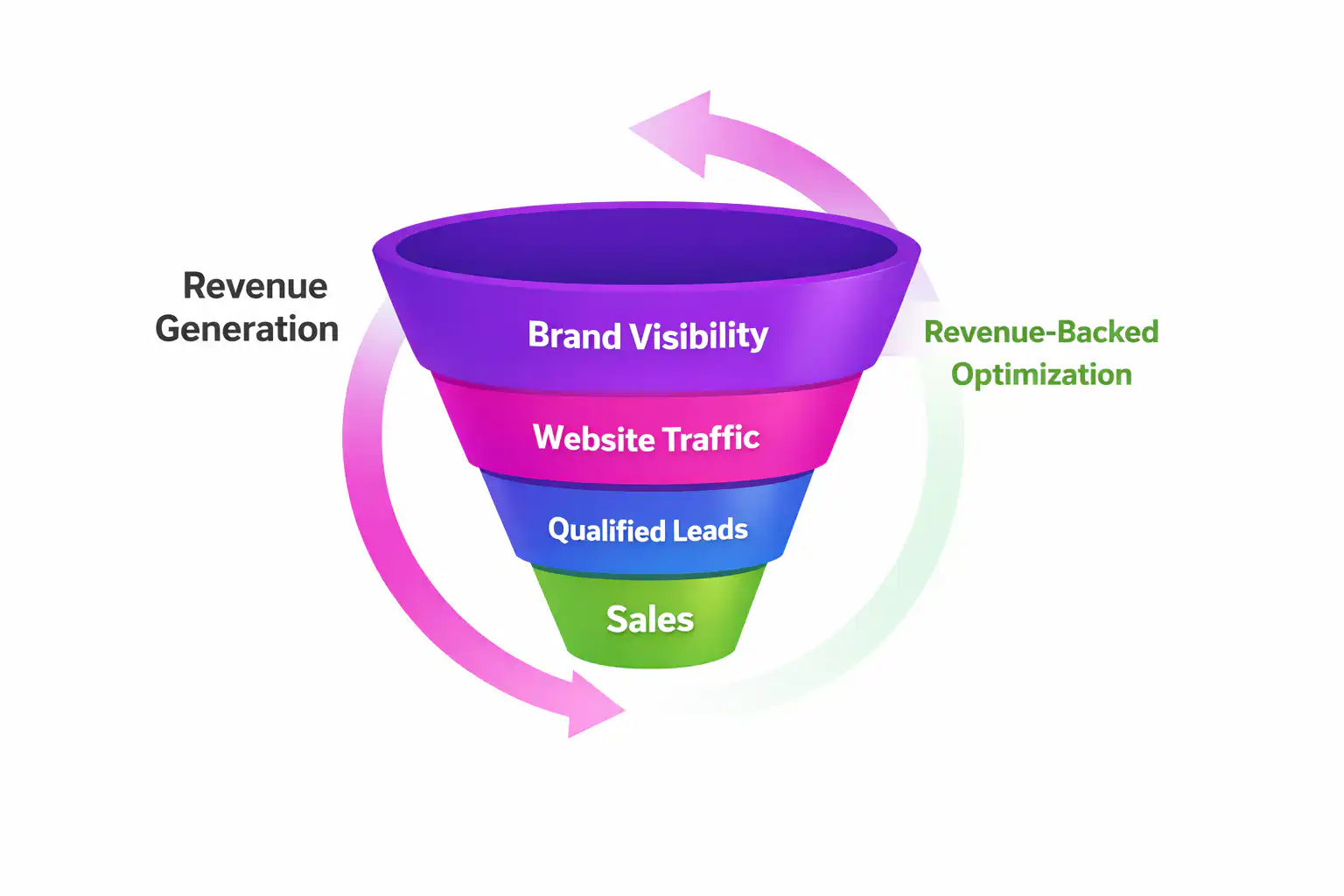
5. Optimization and reporting. Ongoing, we report on cost per acquisition, return on ad spend, viewable impressions, and incremental conversions, and feed retargeting pools back into the funnel. For a full-funnel program we connect this to
SEO and
social media marketing so paid reach and organic presence reinforce each other. Want a plan scoped to your budget?
Contact our team.